Blogs
Department of Education Changes: The Latest Updates Schools Need to Know
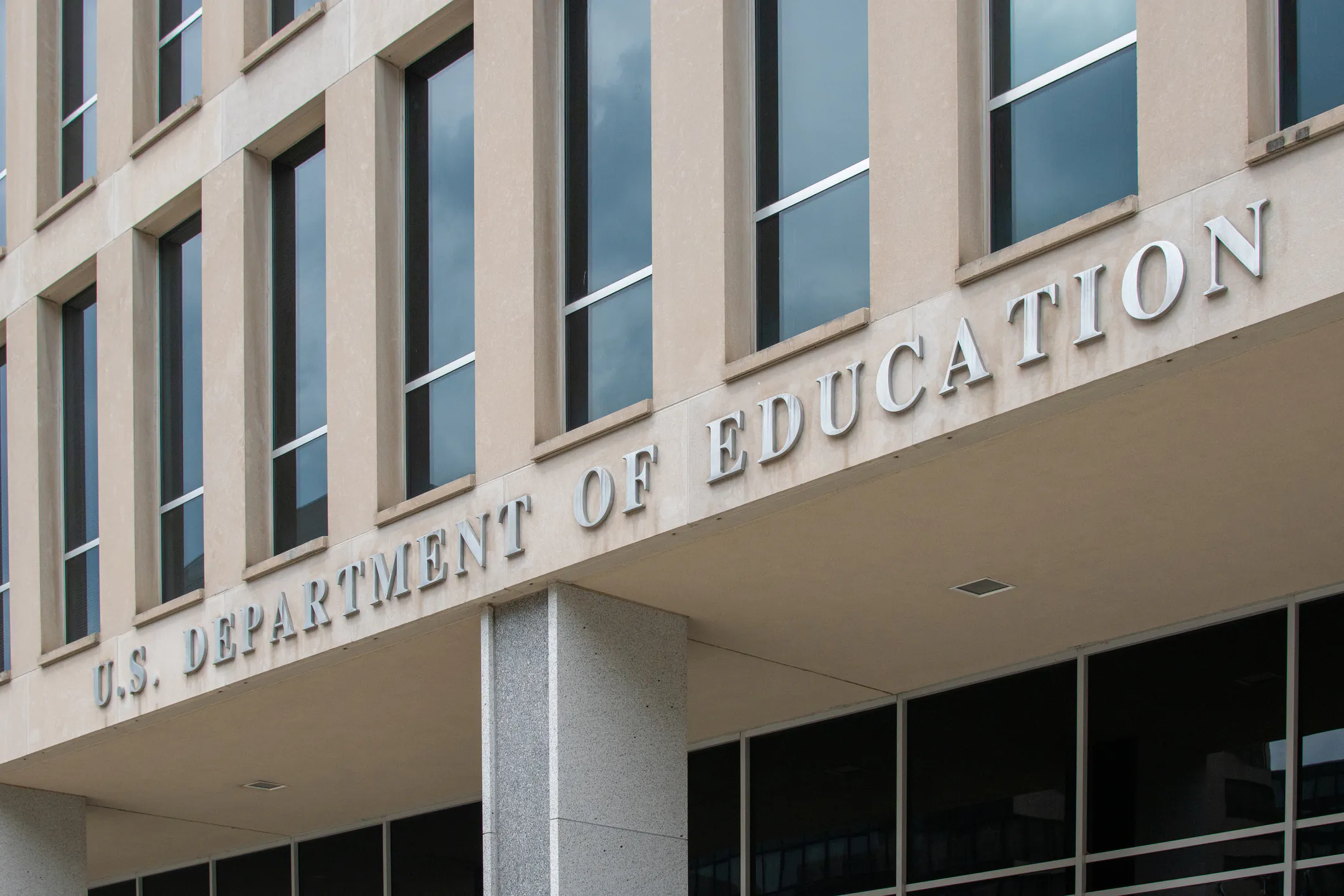
If you’re a school administrator or staff member, you’ve probably heard some version of “the Education Department is disappearing.” That statement contains some truth, but it’s not the entire picture. The Department of Education remains in operation, because Congress is the only legislative body that can shut down a cabinet-level agency, and Congress has not shut it down. But, several changes are being made, and they affect two things school districts care about: civil rights enforcement and special education oversight.
The Education Department is handing off day-to-day management of its office for civil rights to the Department of Justice, and its office of special education programs to the Department of Health and Human Services. Both moves went into effect through interagency agreements announced in June 2026.
What actually moved and what it means
The Office of Civil Rights (OCR) is shifting to Department of Justice’s (DOJ) civil rights division. The Special Education Office and the Rehabilitation Services Administration are shifting to the Department of Health and Human Services (HHS), landing inside the Administration on Disabilities. Together, these two offices join more than 100 other K-12 and higher ed programs that are relocating to other agencies. Reassigning these offices to new government agencies is part of the Trump administration’s plans to phase out the Education Department.
Essentially what is happening is the executive branch reassigned who handles the paperwork and casework, while the Education Department technically keeps legal authority. That’s because only Congress can actually close a cabinet agency, which has not happened.
It’s worth noting that not everything about these moves is administrative. Analysts following the transitions point out that each office may start to take on the culture of its new home. The DOJ approaches issues through a law enforcement and litigation lens, so civil rights cases could end up more closely tied to broader federal enforcement priorities. On the special education side, moving into HHS could bring more coordination with disability and health programs.
What isn’t changing
Funding didn’t move with the offices. Congress approved more than $15 billion for special education this year, and that money still flows the same way it always has, through the Education Department. IDEA hasn’t changed. Section 504 hasn’t changed. A district’s obligations to students with disabilities are exactly what they were last spring.
Who processes a complaint or reviews a case behind the scenes also isn’t changing, at least for now. Families will likely still file civil rights complaints the same way through the Education Department, but that may shift as more of the investigative legwork happens inside the DOJ.
Perspectives on the change
Reactions to these moves have been mixed, and it’s worth hearing both sides directly.
Administration officials, including Education Secretary Linda McMahon, have defended the transfers as ultimately beneficial to students. During an April Senate budget hearing, McMahon told lawmakers the changes are working and framed the agency transfers as helping students move from K-12 into a workforce-ready future. Department officials say the goal is administrative streamlining, not reduced protection for students.
On the other side, former OCR staff have raised concerns about what happens to complaints that used to get automatic review. This is because the DOJ isn’t built like OCR. OCR has historically operated on a case-processing manual that requires it to evaluate every complaint it receives. The DOJ’s civil rights division works on enforcement discretion, meaning it picks which cases to pursue.
Special education advocates have raised concerns about the fit as well. The head of the Council of Administrators of Special Education put it in context, explaining that IDEA is an education law, not a healthcare law, and pulling it into a health agency risks losing staff who understand schools. HHS doesn’t have the built-in relationships with districts that the Education Department spent decades forming.
Disability and civil rights groups have also flagged a coordination problem. Special education, civil rights enforcement, and the rest of K-12 programming are now scattered across three different agencies instead of sitting under one roof, which makes it harder to keep policy consistent for the more than 7 million K-12 students who receive special education services.
What district leaders should track
Headlines can generalize information, so you may be wondering how the changes may specifically impact your situation. A few things worth tracking include:
- Response times on open OCR cases and new complaints filed in 2026
- Any updated guidance on where and how to submit Section 504 or IDEA-related complaints
- Whether special education grant money for next year moves through the usual Education Department system or a new HHS process
- Signals from Congress that there will be push back on some of these transfers
One education policy expert put it well in a recent interview, saying that in the short-term, these changes are more about paperwork and org charts than substance. Long-term, if implementation goes sideways, that’s when districts will feel it, through slower responses, inconsistent guidance, or confusion about who to call.
On the funding side, the news is steady. The Education Department confirmed it will send the Oct. 1 round of K-12 formula funds, including $10.8 billion for Title I and $1.7 billion for Title II, through its existing G5 grants system, rather than shifting to a new platform. State education leaders welcomed that continuity after months of uncertainty about whether a system change would slow down payments.
Separately, an Education Week analysis of federal spending data found the department left more than $75 million in congressionally appropriated funds unspent last fiscal year, including $14.2 million earmarked for the civil rights office and roughly $7 million for education research, well above historical norms for those accounts. A department spokesperson said having some unobligated funds isn’t uncommon. Former officials and outside researchers point to the agency’s reduced staffing and slower program execution as likely factors. Both explanations are worth keeping in mind. It’s not yet clear whether this pattern continues into the current fiscal year, though data through June 2026 suggests a similar pace.
The practical takeaway
The uncertainty created by these changes is creating understandable unease for some schools. Consider scheduling a standing check-in, maybe quarterly, to confirm your compliance and reporting channels still point where you think they should.
As government agencies transition, things can quietly stop working the way they used to without anybody ever giving you a memo. Getting ahead of this means keeping yourself, your HR staff, and your special education teams looped in on any updated federal guidance throughout the fall. That’s where the real changes will show up first.
Want guidance navigating school staffing amid Department of Education changes?
Get the latest blogs, news and company updates
Want to get the latest staffing related news and updates? Subscribe to our resources to get insights sent straight to your inbox.